
How Ahold Delhaize and our brands are driving circularity through reducing food waste and rethinking packaging
September 29, 2025 – With Ahold Delhaize’s global scale, we have the opportunity to help drive meaningful change. By embedding health and sustainability into how we operate, each local initiative can help us advance our group-wide targets and ambitions. One of the more impactful areas where our scale matters is circularity: the practice of keeping resources in circulation for as long as possible, thereby minimizing waste.
In the area of circularity, Ahold Delhaize’s local brands reduce food waste in our own operations and strengthen collaboration with local food banks. While for packaging, our focus is on own-brand plastic product packaging reduction.
Reducing food waste across our brands
By combining smart technology with a strong focus on sustainability, our brands are making real progress in reducing food waste. From intelligent order algorithms that optimize inventory, to creative solutions like turning left-over produce, or produce not fit for sale, into new dishes such as banana bread or cauliflower rice – we’re finding new ways to give food a second life. Here are more examples of how our brands are tackling food waste:
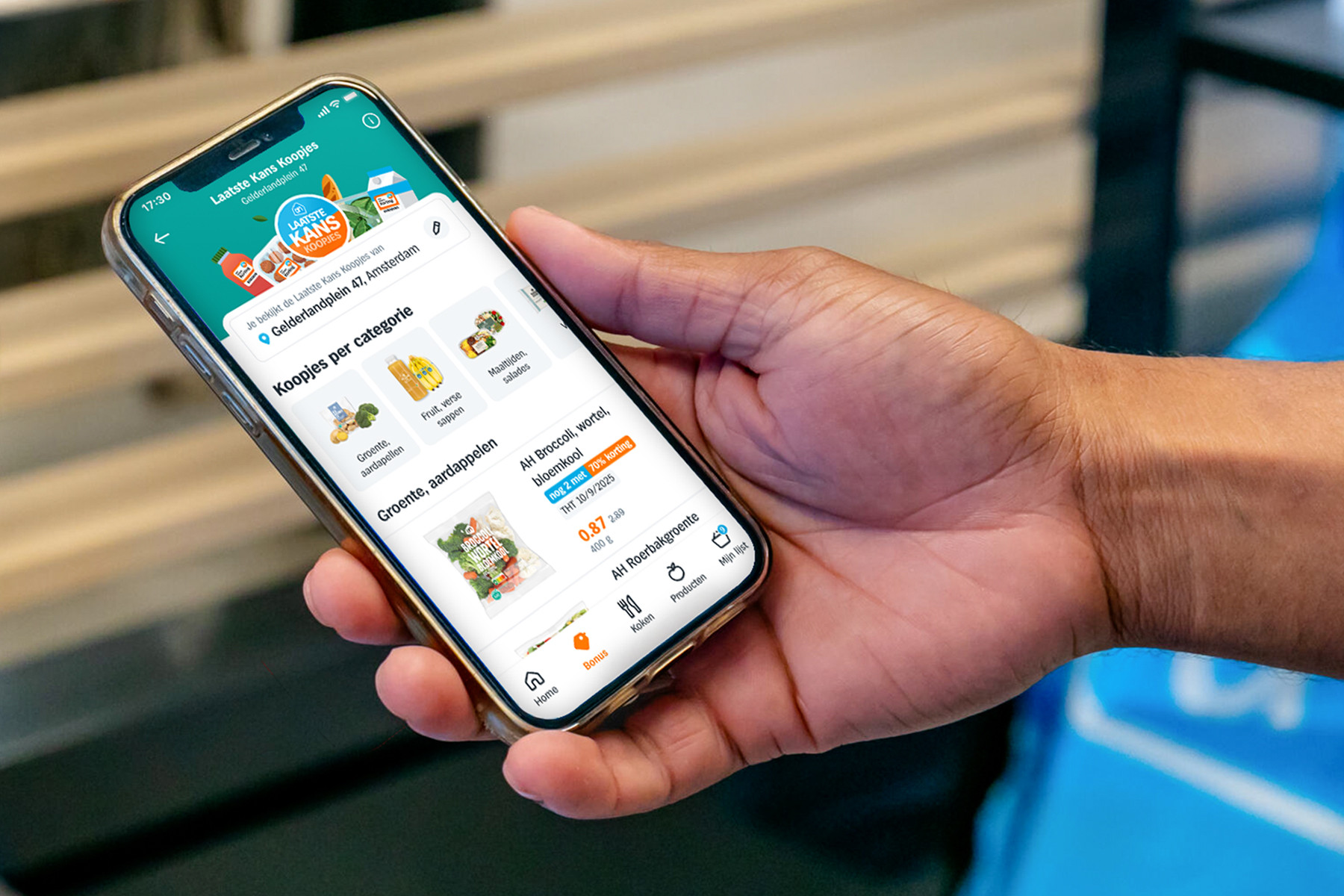
- Last-Minute savings and tech-driven freshness: Products nearing their expiration date are offered at special discounts, giving customers great deals while preventing food from being wasted. A recent example of this is Albert Heijn’s newly launched Last Chance Bargains which uses smart technology in the AH app to bundle existing initiatives that offer extra discounts on products with a short shelf life or discontinued products. Albert Heijn also uses electronic shelf pricing which automatically marks down product prices as they near their expiration date, helping reduce food waste and offer better deals to customers.
- Diverting food from landfill: When food can’t be sold or consumed, our brands try to find alternative ways to recycle it, like turning it into animal feed, renewable energy, or industrial materials. For example, our brand Giant Food in the U.S. partnered with Divert to process nearly 80 million pounds of unsold food since 2022, preventing over 37,000 tonnes of CO₂e emissions. Their joint recycling program transforms unsold food into clean energy, helping reduce landfill waste and environmental impact.
Fighting food waste and feeding communities
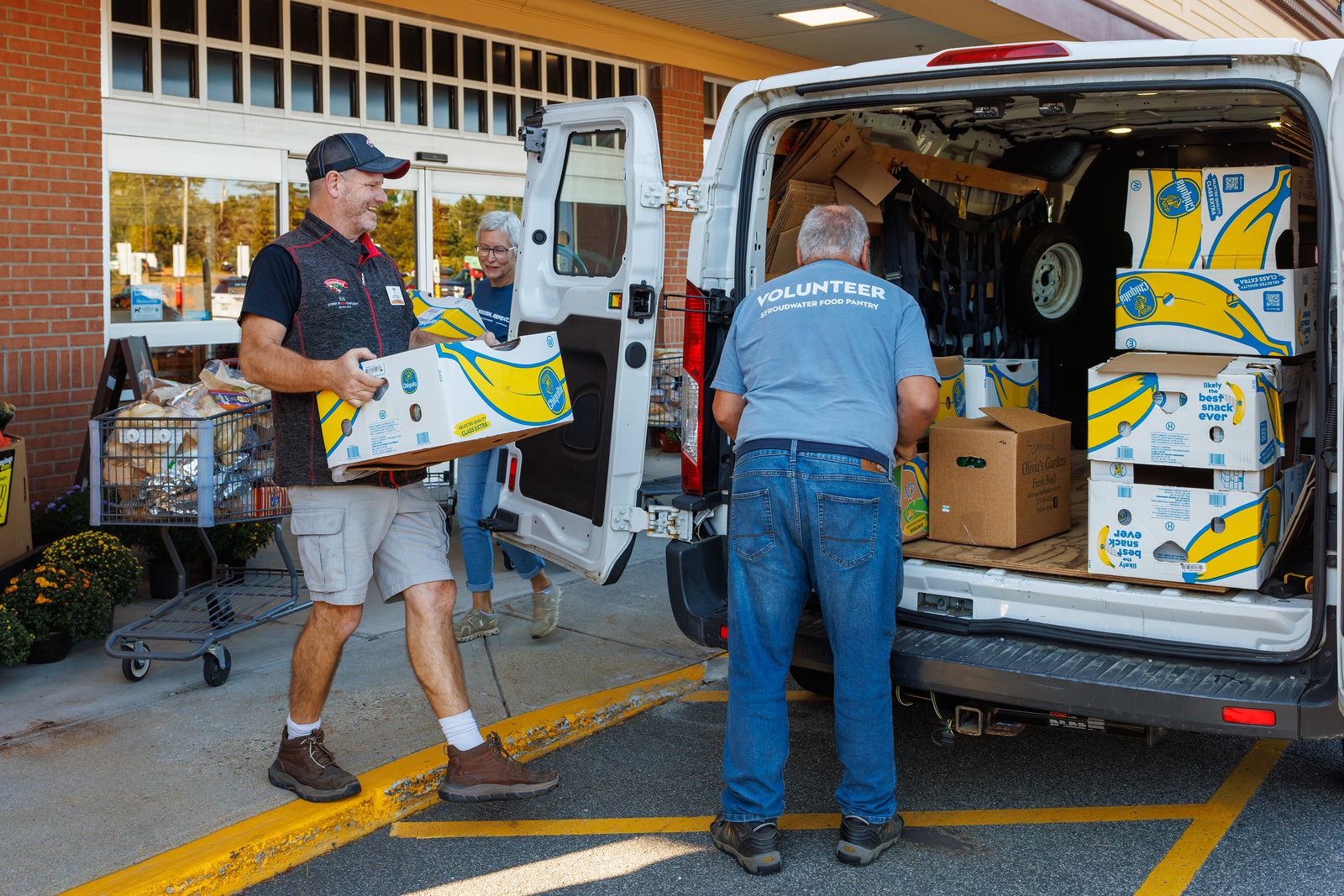
Our great local brands do much more than sell groceries – many of them actively address food insecurity in the communities they serve by donating food, providing grants that address food insecurity and aim to ensure food is saved before going to waste. In 2024, our brands donated 75,000 tonnes of food waste or 25% of unsold food. Beyond these donations of unsold products, our brands also run a wide range of initiatives, such as Food Lion Feeds, Stop & Shop’s School Food Pantry program, The GIANT Company’s eliminating hunger initiatives, Giant Food’s community programs, and Hannaford’s food access initiatives. These programs often provide food or funding to strengthen community food access, complementing the direct donation of unsold products and ensuring support reaches those who need it most.
At Group level, in 2024 Ahold Delhaize entered a partnership with The Global FoodBanking Network (GFN), an international non-profit organization dedicated to alleviating food insecurity while reducing food loss and waste. We’ve extended this partnership to continue supporting local communities through strong collaborations with organizations like Feeding America and the European Food Banks Federation. Together, we’re helping expand and strengthen food banks so more people have access to the food they need.
Rethinking packaging for a circular future
Within its own operations, Ahold Delhaize’s approach toward packaging is focused on own-brand products and their primary plastic packaging, as we have better influence over the related processes within the value chain. By eliminating unnecessary packaging, increasing recycled content, and shifting to reusable options, our brands are driving progress toward a more circular system.
Guided by the Ellen MacArthur Foundation (EMF), together with our brands, we’re taking a full life-cycle approach to packaging. Here’s how we’re making it happen:
Eliminate: We’re removing unnecessary plastic through smarter design and innovation. This includes reducing packaging weight and exploring alternatives that maintain product quality without excess material.
Shift to reuse: Moving beyond single-use, we’re exploring reusable alternatives.
Shift to recyclable or compostable: Moving toward own-brand packaging that is recyclable or compostable in practice, not just in theory. In this sense, we analyze the availability of recycling infrastructure to choose packaging which have higher chances of being recycled.
Decouple from fossil fuels: We’re cutting back on virgin plastic and using recycled content wherever possible. Additionally, some of our brands are investigating renewable feedstocks from responsibly managed sources to rely less on plastic derived from fossil fuels.
Just last week, our Belgian brand, Delhaize, shared that it has saved more than 3,668 tonnes of plastic – the result of more than 135 concrete initiatives since 2019. Read more about Delhaize’s work in reducing plastics here (translate to English).