
Supporting communities and reducing food waste: Interview with The Global FoodBanking Network
May 23, 2025 – Ahold Delhaize has been partnering with The Global FoodBanking Network (GFN) since July 2024 to help address food insecurity and provide support to local communities to access essential food. This partnership supports community-led food banks, while amplifying and accelerating the great work that our local brands have already been doing for years. This is all part of our commitment to supporting a healthy and sustainable food system, including making sure that food reaches those who need it most while minimizing waste.
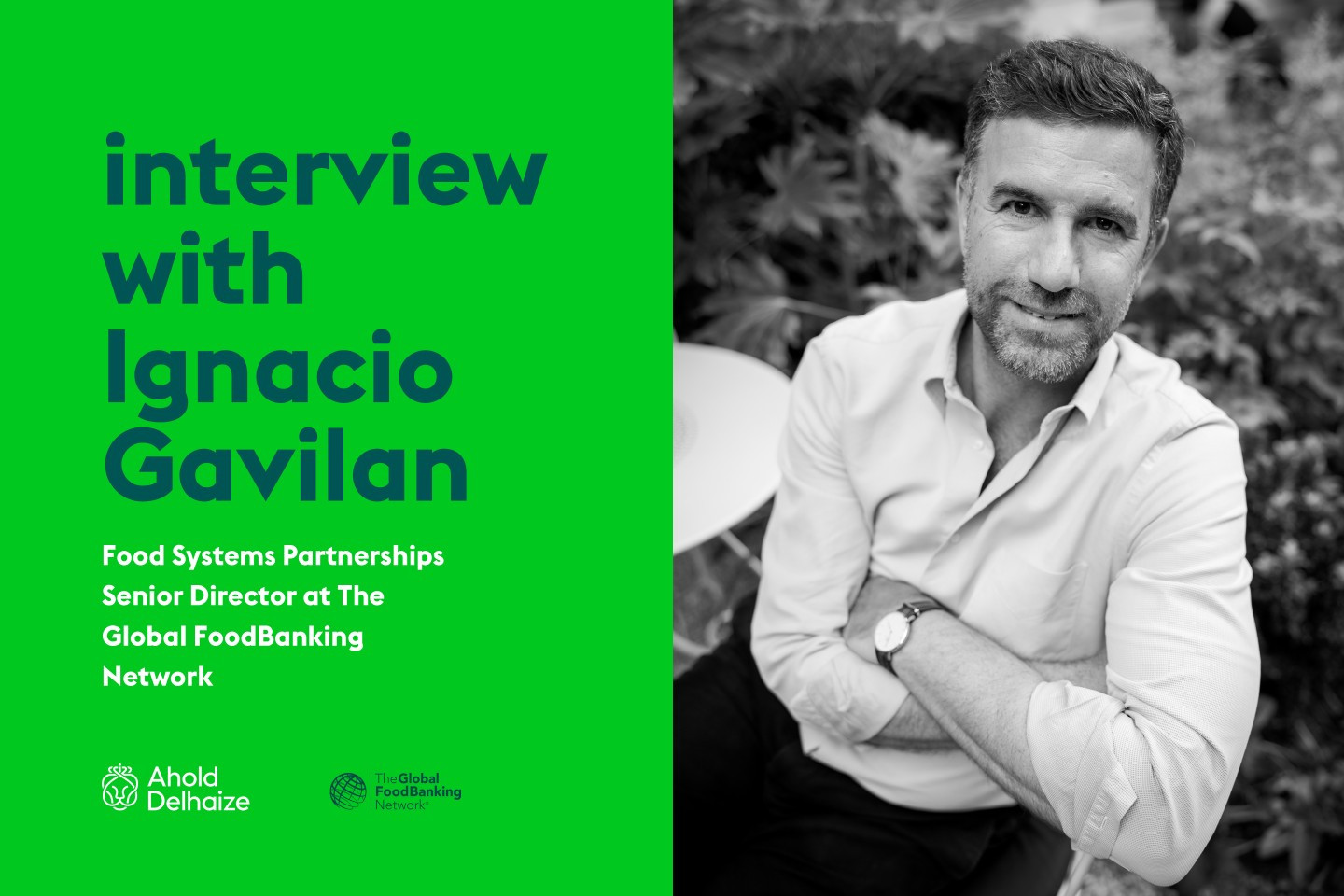
To explore the role of food banks and the power of strategic partnerships, Ahold Delhaize interviewed Ignacio Gavilan, GFN’s Food Systems Partnerships Senior Director. With over 20 years of experience advising businesses on sustainable supply chains and ESG, he shares his insights on the importance of food banks, the value of partnerships like the one with Ahold Delhaize, and the innovations shaping the future of food recovery and redistribution.
What is the purpose of The Global FoodBanking Network? What role does it play in promoting food security and reducing food loss and waste globally?
Our mission at The Global FoodBanking Network is to nourish the world’s hungry by uniting and advancing food banks around the world. Today, we work with 64 food banking organizations in 54 countries. Our goal is always to help them to grow, expand and enhance the quality of the services they provide to people facing food insecurity. In 2024, our food banks provided food to more than 40 million people and we’re working towards a goal of feeding 50 million people by 2030.
Given your extensive experience with food systems, what first inspired you to get involved in these critical global concerns?
As Director of Sustainability at the Consumer Goods Forum for nine years, I worked closely with the top fast-moving consumer goods (FMCG) companies on issues like deforestation-free commodities, plastic pollution, food waste and the decarbonization of food supply chains. Of all these, I found food waste reduction to be the most cost-effective and impactful solution available to decarbonize our activities and alleviate hunger.
How does the collaboration with Ahold Delhaize support GFN's purpose and strengthen its efforts?
Ahold Delhaize’s contributions to GFN are what allow us to provide the training and technical support that helps food banks grow around the world. But the relationship goes deeper than that. It facilitates and strengthens Ahold Delhaize's brands’ efforts with local food banks. Product donations are critical to food banks, and their partnerships can ensure that products reach food banks, meet high standards of food safety and product tracing, and share our mission of reducing food waste and feeding those in need.
What are the most significant changes you have seen in the way global food systems address food waste and hunger, and where do you see the partnership with Ahold Delhaize driving future progress?
We’ve seen some progress on the global stage, but not nearly enough. We research food laws around the world, and there’s a lot more that lawmakers could do to enable food donation and reduce food waste. Things like dual-date labeling – providing a “Best before” label for food quality in addition to a “Use by” label for food safety – and tax incentives for donating food can really increase food recovery and redistribution. A change in consumer mindset is also important. So much food that ends up in landfill is perfectly fit for human consumption. And even once it passes that point, there’s a lot we can do to reduce the environmental impact of food waste – like turning it into animal feed or compost. By working with food banks, Ahold Delhaize is demonstrating that just because a product is unsellable, it still holds value.
What are some of the key challenges you see in addressing food insecurity and food waste?
Major companies can get more involved in food loss and waste. One example is collaborative agreements that bring together the private sector with NGOs and the government to report their food waste metrics and set goals for reduction. Agreements like this exist across Europe and in countries like Mexico and South Africa – proving to be effective. Looking more broadly, the large cuts to foreign aid (especially USAID) will worsen food insecurity in places where hunger is severe. The cuts have not yet directly impacted The Global FoodBanking Network or our members, but we expect demand for food assistance to increase in places where aid cuts were most drastic.
What opportunities do you see for food retailers and manufacturers to make progress in future?
We continue to see progress from retailers and manufacturers in responsibly managing food waste in their own facilities. Going forward, I see opportunities to work with suppliers to ensure that we’re reducing food waste – and donating what can no longer be sold but is still safe to eat – along every link in the supply chain.
What advice would you give to people who want to get more involved in tackling food waste and hunger, both in their professional roles and in their personal lives?
Remember the importance of ongoing, small wins to keep demonstrating the ability to change. Small actions around our lives relating to our purchasing habits, the way we discard food, or how we plan our events are important. When it comes to radical change in transparency and accountability, I remain very optimistic.
GFN 2024 Annual Report
To learn more about GFN’s impact, explore their 2024 Annual Report, which highlights key achievements such as serving 40 million people, preventing 1.8 million metric tons of carbon emissions, and supporting 76,000 community organizations.