

Understanding Ahold Delhaize’s renewable energy program
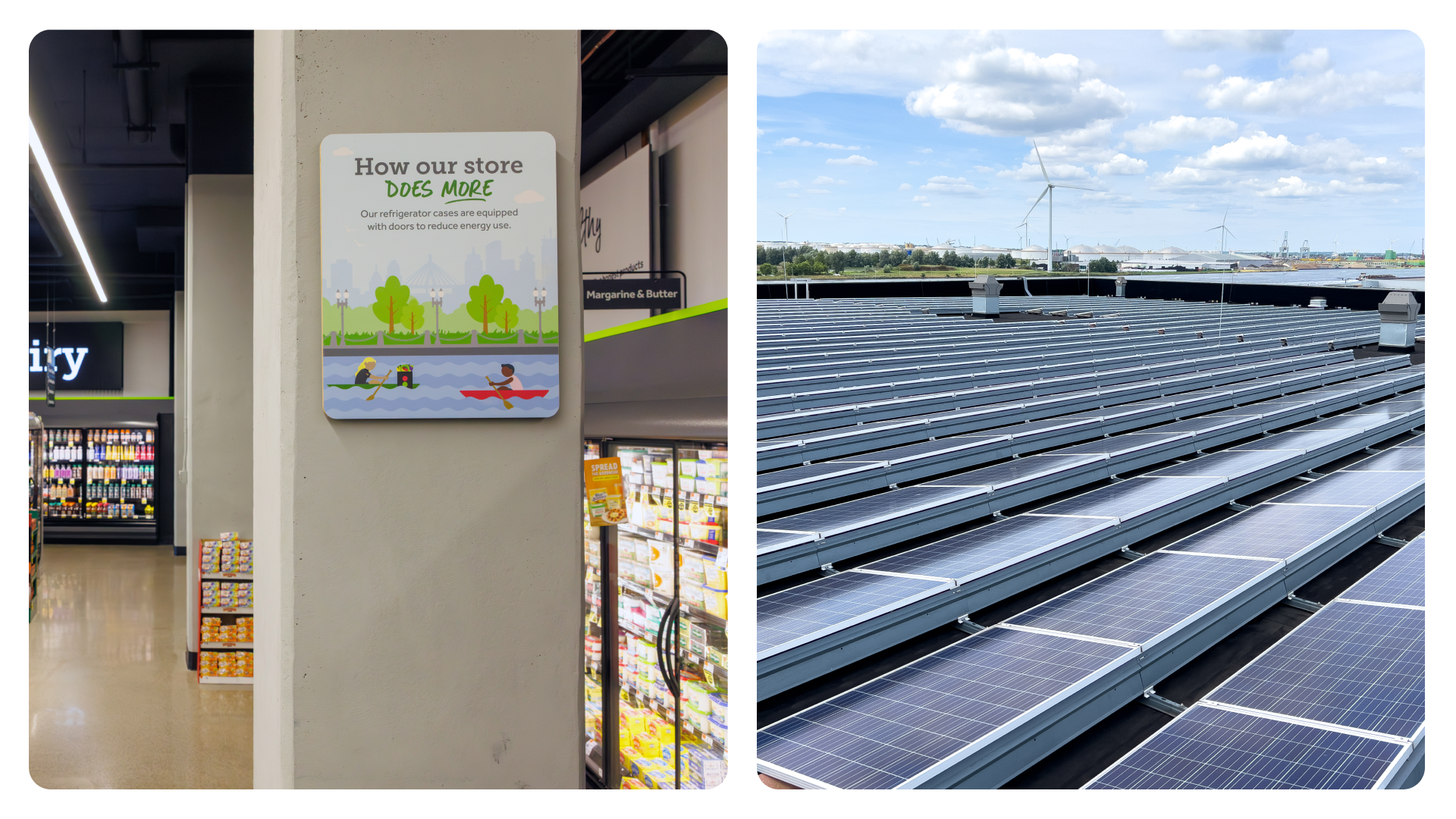
March 31, 2026 – As a family of great local brands, we are ambitious about the positive impact we can have in accelerating the transition towards a healthier and more sustainable food system. An important part of this is how we power our operations. From keeping food fresh, to lighting our stores, to transporting products from distribution centers to stores and homes and running our supply chains: energy is at the heart of how we operate. Transitioning that energy to renewable sources is key to reducing our carbon footprint and achieving our climate targets and ambitions.
Renewable energy’s role in our climate targets and ambitions
Electricity has historically been one of our largest sources of operational emissions (scope 1 and 2). That’s why renewable energy sources for electricity play a central role in our climate agenda and in our target to reach net-zero carbon emissions across our own operations by 2040. As an important milestone on that path, we aim to reduce electricity-related emissions to zero by 2035. To achieve this, we follow a three-step approach: ‘Use Less, Make Our Own, and Buy Green’.
1. Use Less: becoming more energy-efficient
The cleanest energy is the energy you don’t use. Across our brands, we continually improve energy efficiency with LED lighting, heat recuperation, heat pumps, smarter refrigeration systems, and better insulation. These upgrades make our stores, distribution centers, and offices significantly more energy‑efficient and fit for the future.
2. Make Our Own: generating renewable power on-site
Where possible, we generate our own clean electricity. Thousands of solar panels on the roofs of our stores, distribution centers, and offices help power our operations with sunshine. This reduces our reliance on the grid and allows us to produce renewable electricity close to where it’s used. In 2025, the use of solar panels enabled us to increase the electricity generated and used on-site by 62% compared to 2024.
3. Buy Green: bringing new renewable energy onto the grid
It is not feasible to cut back our energy consumption to zero, nor to generate all the electricity we require ourselves. To cover the rest of our electricity needs, we invest in renewable energy through long‑term contracts. This is where Power Purchase Agreements (PPAs) come in.
What are Power Purchase Agreements?
PPAs are long-term offtake agreements between a renewable energy developer and an electricity consumer (usually a company) that make it possible for a solar/wind park to come into existence. Through these agreements, a minimum income level is guaranteed to a developer for the electricity generated by the renewable energy installation. Having secured a steady income flow, the developer is able to finance the construction of the project. In return, the consumer receives renewable energy or renewable energy certificates.
There are two types of PPAs:
- Direct PPAs are long‑term agreements in which the buyer receives electricity from a nearby renewable energy project. It usually requires the developer and consumer to operate in close vicinity.
- Virtual PPAs (VPPAs) work similarly, but instead of receiving electricity physically, the buyer supports the development of the project financially and receives the renewable energy certificates it generates. The renewable energy generated is sold into the local grid, for example to households or businesses in that market.
By entering into a PPA, companies like Ahold Delhaize directly support the creation of renewable power plants, which is essential to accelerate the transition to a low‑carbon economy.
Examples from our markets
In Europe, we have supported a large solar plant development in Spain, and new wind farms in the Netherlands, Romania and Finland through a total so far of four (V)PPAs. In the U.S., our local brands have entered into a total of eleven agreements tied to underlying PPAs for renewable energy to support the construction of solar projects on the East Coast, between Maine and Maryland/DC.
These projects generate nearly 2,000 gigawatt-hours of clean electricity annually and significantly increase the share of our operations powered by renewables.
Looking ahead
Going forward, we will continue advancing our efforts in reducing energy usage, generating our own renewable electricity and buying green energy. Every partnership, efficiency upgrade and renewable agreement brings us closer to achieving our climate targets and ambitions, enables us to contribute to the renewable energy infrastructure in the U.S. and Europe, and strengthens our energy resilience.
For more information about our Healthier Communities and Planet strategic priority, please visit our Annual Report.
To learn more about how we bring Power Purchase Agreements to life, watch Isabelle’s story below: