
Understanding Ahold Delhaize’s supply chain collaborations (scope 3)
October 8, 2025 – With Ahold Delhaize being one of the world’s largest retailers, we have an opportunity to contribute to the transformation of the food system. Amongst many other health and sustainability priorities including circularity and healthier choices, we also focus on climate together with our value chain partners. We work to reduce value chain emissions by shifting to non-fossil derived fuels, lowering energy consumption, increasing renewable energy and driving more efficient transport in our brands' operations, while working with suppliers to identify and implement initiatives for greenhouse gas emissions reduction relative to their business.
A simple soup, a complex process
Picture this: It’s a cool winter’s day, so you decide that tonight calls for something hearty. A vegetable soup. You make your way to your local supermarket and fill your basket with key ingredients: carrots, leek, potatoes and fresh herbs. All seasonal and healthy foods – likely, one of the most climate-friendly meals you could make. And it is, compared to many other choices, but this wholesome and healthy soup still has a carbon footprint.
Behind every ingredient lies a complex process. The carrots were grown on a farm that uses fertilizer. The potatoes were stored in refrigerated warehouses. The herbs were packaged to stay fresh until they reached your kitchen. In fact, each of these three ingredients were part of the farm to kitchen process. From farming and production to transportation and storage – every step in the journey of your soup contributes to its carbon footprint, and is part of our so-called scope 3 emissions: the indirect emissions that are part of our value chains.
Farm to shelf, the bigger picture
Our 17 local brands offer hundreds of thousands of products from more than 10,000 suppliers. Each of those suppliers have supply chains of their own, stretching across the globe. This complexity means that more than 95% of Ahold Delhaize’s greenhouse gas emissions come from scope 3, the wider value chains beyond our direct operations. That’s why working towards our climate ambitions requires close collaboration with partners across our entire value chain.
Our brands have several initiatives in which they work with suppliers to drive reductions in scope 3 emissions while trying to build a more sustainable and resilient food system.
How Ahold Delhaize USA is partnering with suppliers
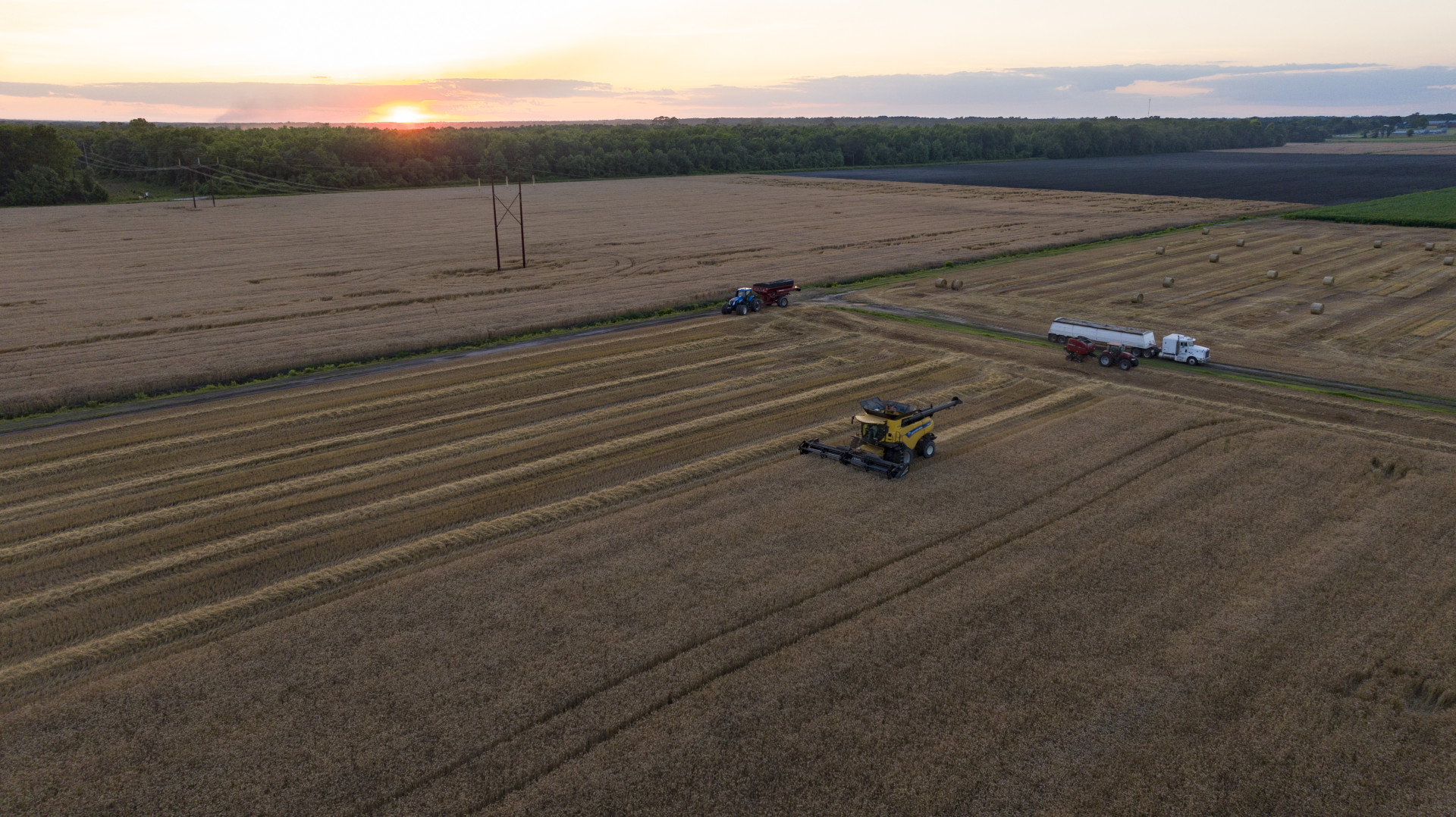
Just last month, Ahold Delhaize USA (ADUSA) introduced their partnership with Danone North America and The Nature Conservancy, kicking off their first dairy-focused pilot, aiming to reduce methane from yogurt production over the next five years. Additionally, ADUSA is partnering with other major suppliers to reduce greenhouse gas emissions and support regenerative farming across the country. With Kellanova and Bartlett, ADUSA is piloting regenerative wheat farming in North Carolina to improve soil health and resilience, with products like Cheez-It® and Club® crackers soon reaching shelves.
Together with General Mills, ADUSA is co-investing in supply sheds across Kansas and Saskatchewan, bringing regenerative practices to 70,000 acres of wheat and oat farmland by 2025. And with Campbell’s, ADUSA launched a three-year potato farming initiative across 1,000 acres in three states, helping farms adopt practices such as cover cropping, nutrient management, and renewable energy. Each of these collaborations provide valuable experience and demonstrate how working with suppliers at the source can drive reductions of their emissions and our scope 3 emissions. Read more about these initiatives here.
Initiatives driving sustainable agriculture and collaborative decarbonization
Across Europe, Ahold Delhaize’s brands are advancing collaborations that support farmers and suppliers, reduce emissions, and support more sustainable practices. To support suppliers in their decarbonization processes, Ahold Delhaize’s European brands launched open-source climate hubs last year, online platforms where suppliers can access guidance, training, and resources such as the Greenhouse Gas Protocol to measure and reduce value-chain emissions (scope 3).
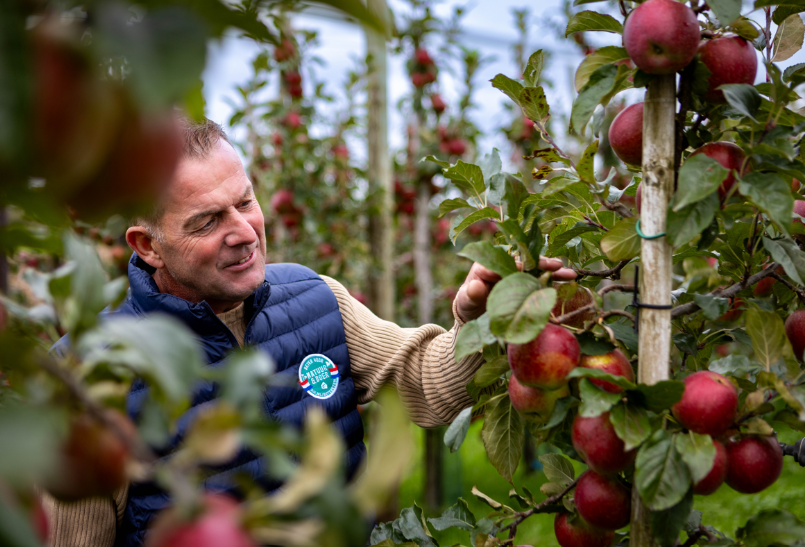
In the Netherlands, Albert Heijn’s Better for Nature & Farmer program engages nearly 1,200 farmers and growers through multi-year partnerships focused on revenue models, animal welfare, and guaranteed offtake. In 2023 the program was opened up to other stakeholders as an independent foundation. Albert Heijn also co-developed the WWF Basket approach with WWF NL, aiming to halve the ecological footprint of the Dutch food system by 2030.
In Belgium, Delhaize introduced the Cultivation Academy earlier this year in collaboration with produce supplier Bakker and agricultural expert Arvesta. This initiative empowers local growers to adopt regenerative agriculture practices, improving soil health, biodiversity, and water efficiency, while offering consumers vegetables with a smaller ecological footprint. To support farmers in this transition, Delhaize provides additional compensation models, ensuring sustainable practices remain economically viable.
And because working together better positions us to enable progress, Ahold Delhaize also launched the Healthy Future Academy, an internal learning program designed to equip associates with the knowledge, skills, and confidence to further integrate health and sustainability in their daily work.
Further information
For more information and resources, see the following: